
Why Road Salt Is a Major Risk for Dogs in Alberta
What Road Salt Actually Does to Paw Pads
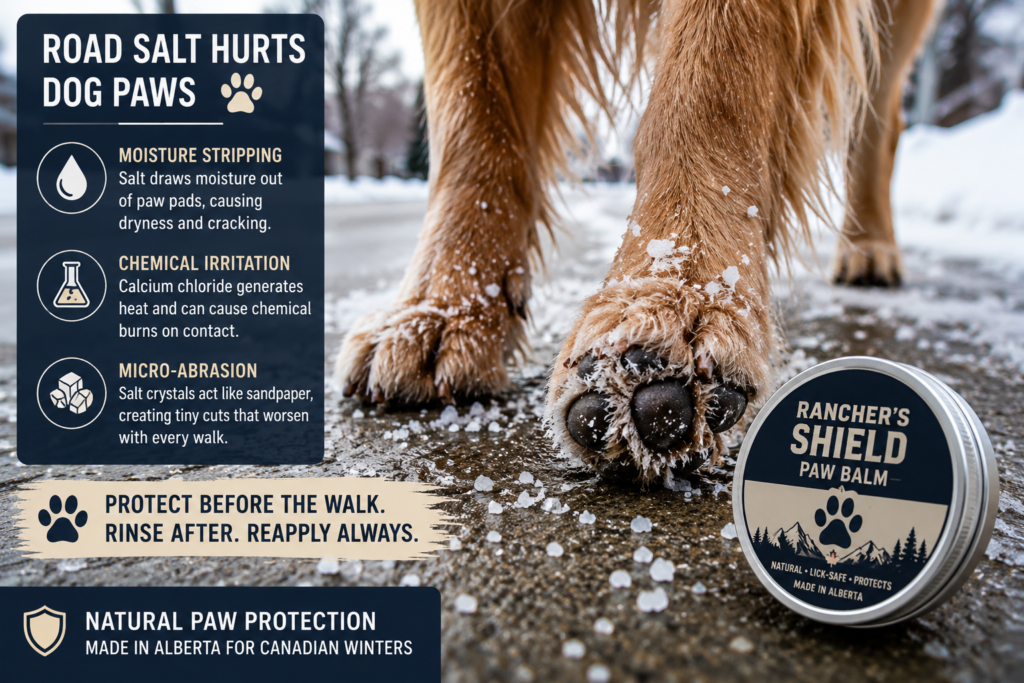
Road salt damages dog paws in three ways:
- Moisture stripping: Salt is hygroscopic. It pulls water out of the paw pad tissue, leaving the skin dry, stiff, and prone to cracking
- Chemical irritation: Calcium chloride, commonly used in Alberta because it works at temperatures below -20°C, generates heat as it dissolves and can cause direct chemical burns on contact
- Micro-abrasion: Salt crystals act like tiny abrasive particles, creating small cuts in the pad surface that worsen with every walk
The damage is cumulative. A single salted walk won’t destroy healthy paws, but repeated exposure over a five-month Alberta winter absolutely will.
Salt Toxicity When Dogs Lick Their Paws
Can road salt make my dog sick? Yes. When dogs lick salt off their paws after a walk, they ingest de-icing chemicals directly.
Small amounts typically cause vomiting, diarrhea, and excessive thirst. Larger amounts can lead to sodium toxicity — a serious condition that causes muscle tremors, seizures, and in extreme cases, death.
This is why wiping or rinsing paws before your dog has a chance to lick them is so important. Most dogs start licking within seconds of coming inside.
The Alberta Winter Salt Season: When Is Your Dog Most at Risk?
Salt damage peaks during three specific windows in Alberta:
- First major snowfalls (November–December): Fresh applications on first-time snow cover mean heavy salt concentrations
- Chinook thaws (Calgary specifically): Melting snow dissolves salt into concentrated brine pools that cling to paws
- Late winter freeze-thaw cycles (February–March): Repeated melting and refreezing creates a layered salt-ice crust on most walking surfaces
The danger isn’t just during snowstorms — it’s every day that treated surfaces remain exposed.
Signs Your Dog’s Paws Have Been Damaged by Salt
How do I know if road salt hurt my dog’s paws? Watch for these signs after winter walks:
- Limping or favoring a paw — often the first visible sign
- Licking or chewing at paws immediately after coming inside
- Visible cracking or redness on the pad surface or between toes
- Bleeding from pad fissures
- Whimpering when you touch the paws
- Reluctance to go outside in winter — some dogs learn to associate walks with pain
If you see bleeding or deep cracks, contact your veterinarian before attempting home treatment. Infected pad wounds escalate quickly.
How to Protect Your Dog from Road Salt in Alberta
Apply Paw Balm Before Every Winter Walk
A natural, wax-based paw balm creates a barrier between the pad and the salt. Apply it to all four paws — pads, between toes, and pad edges — right before heading out. You can find our recommended balm in the Tail Wag Vitals shop.
Rancher’s Shield Paw Balm uses a beeswax base that stays effective at -30°C, which most commercial balms can’t do. The wax layer blocks salt contact while conditioning oils underneath keep the pads elastic and resilient.
Rinse Paws After Every Walk
This is non-negotiable. Every time your dog comes inside:
- Rinse all four paws with lukewarm water
- Gently pat dry with a clean towel
- Inspect for salt crystals, cracks, or redness
- Reapply paw balm
Don’t use alcohol-based wipes or anything with fragrance — these strip the natural oils you’re trying to protect.
Consider Dog Boots for Extended Exposure
Boots provide a complete physical barrier and are the most effective salt protection available. They’re worth the investment if your dog will tolerate them. Look for flexible soles, secure velcro closures, and proper sizing. Introduce them gradually indoors with positive reinforcement. If you need help choosing the right gear, you can always contact our team.
Rancher’s Shield: Alberta’s Natural Paw Balm
Rancher’s Shield Paw Balm was built for exactly this problem — Alberta road salt on Alberta dog paws.
Why it works for salt protection:
- Beeswax barrier: Physically blocks salt and calcium chloride from reaching the pad
- Cold-stable formula: Doesn’t freeze solid or melt off at extreme temperatures
- 100% lick-safe ingredients: Every component is food-grade and non-toxic
- Conditions while it protects: Coconut oil, olive oil, and shea butter repair damage beneath the barrier layer
It’s not a cosmetic balm with a nice label. It’s a working dog product that handles real Alberta winter conditions.
City-by-City Salt Risks: Calgary, Edmonton, Lethbridge
Calgary: Chinook thaws are the biggest danger. Rapid melting turns accumulated road salt into concentrated brine that coats paws more thoroughly than dry salt ever could. Extra vigilance needed during warm spells.
Edmonton: Sustained deep cold means pads dry out faster and cracks worsen quickly. The city uses a sand-salt mix on residential streets and heavier salt applications on major corridors. Consistent balm application is critical during -20°C+ stretches.
Lethbridge: Extreme wind chill accelerates moisture loss from paw pads and drives ice particles into pad surfaces like sandpaper. Sheltered walking routes help, but balm protection is essential regardless.
Frequently Asked Questions
Q: How quickly can road salt damage dog paws? A: It depends on the exposure:
- Cumulative damage: Visible cracking and dryness usually build over multiple walks.
- Immediate irritation: Chemical irritation from calcium chloride can cause redness and discomfort after just one heavy-contact walk.
Q: Is pet-safe road salt actually safe for dogs? A: No. “Pet-safe” de-icers (usually urea-based) are less corrosive than traditional salt, but they are not harmless. They can still cause paw irritation and should never be ingested.
Q: Can I just use Vaseline instead of paw balm? A: Vaseline is a poor substitute for a proper paw balm.
- The downside: It creates a barrier but does not condition or repair the skin. Repeated use also over-softens pads, making them prone to injury.
- The better choice: A natural, wax-based balm provides a barrier while actively conditioning and protecting the tissue.
Q: What do I do if my dog ingests road salt? A: Action depends on how much they ingested:
- Small amounts: Monitor for vomiting, diarrhea, or excessive thirst. Provide fresh water immediately.
- Large amounts or severe symptoms: If your dog shows muscle tremors, lethargy, or seizures, contact your veterinarian or an emergency vet clinic immediately. This is a medical emergency.
Q: Does my dog need paw protection if we only walk on snow-covered trails? A: Yes, but the risk is lower. Unsalted snow trails are far safer than city sidewalks. However, extreme cold alone still dries out paw pads. Balm is still recommended for moisture retention, just less urgently than for salted-surface walks.
Ready to protect your dog’s paws from harsh Alberta road salt this winter?
Shop Rancher’s Shield Paw Balm
Learn More About Tail Wag Vitals
What does road sal