
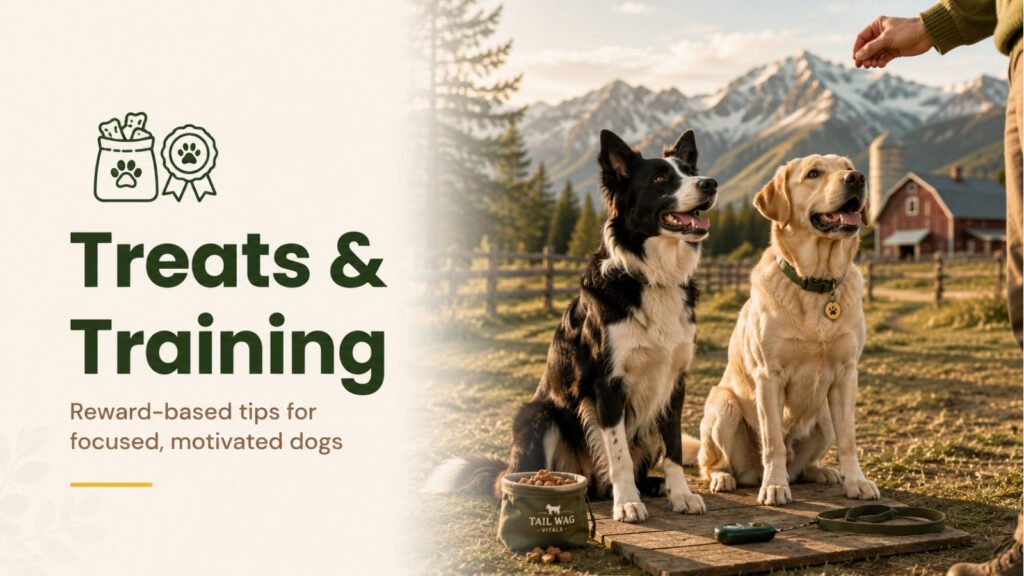
Best Training Treats for Dogs: What Professional Trainers Actually Use
Walk into most training classes and you won’t see standard biscuits coming out of anyone’s treat pouch. You’ll see small, soft, strong-smelling pieces that disappear in a single bite. That’s not a coincidence or simply a matter of trainer preference. Trainers choose these treats because they support fast, repetitive training without forcing the dog to stop and spend time chewing. A small piece also lets the handler reward the exact behavior they want within seconds, then move straight into the next repetition. Strong aroma can help the treat compete with distractions, while a soft texture makes it easy to break into even smaller portions. These practical details matter when a single session can involve dozens of rewards.
What Professional Trainers Actually Look for in Treats
A training treat has a different job than a treat given at home for good behavior. It needs to reinforce a specific moment without slowing down or interrupting the session that moment is part of.
High Value, Low Volume The Trainer’s Formula
Positive-reinforcement training follows a straightforward principle: match the reward to the difficulty of the behavior you ask your dog to perform. A dog learning a new behavior or working through heavy distractions needs a stronger reward than a dog performing a familiar behavior. Trainers sometimes describe this approach as a reward hierarchy: use low-value, frequent rewards for easy repetitions and save higher-value rewards for breakthroughs or difficult moments. VCA Animal Hospitals notes that trainers should give valuable rewards consistently when establishing a new behavior. For particularly challenging behaviors, trainers can give several treats at once, sometimes called a jackpot, before moving to a more intermittent reward schedule as the behavior becomes established.
The low-volume part of the formula matters just as much as the reward’s value. A single training session can involve dozens of repetitions and, therefore, dozens of treats. If each treat contains a lot of calories or comes in a large size, your dog can feel full or exceed their daily calorie needs before you finish the session.
Speed of Consumption and Session Flow
Every second a dog spends chewing is a second they’re not focused on the handler. This is the practical reason small, soft, quickly-consumed treats dominate training kits: a treat that disappears in under a second keeps the dog’s attention on the next cue instead of on the treat itself. A treat that takes 10 to 15 seconds to chew through breaks that rhythm every single time it’s given, which adds up fast across a real session.
Why Most Pet Store Treats Fail in Training
Most treats sold for general snacking weren’t designed with a training session in mind, and it shows in a few specific, fixable ways.
Size, Crumble, and Calorie Problems
Standard biscuit-style treats tend to run into three separate problems during training. Size: most are built to be a single, satisfying snack rather than something you can hand out dozens of times per session without overfeeding. Crumble: dry, crunchy treats often break apart in a pocket or treat pouch, leaving crumbs that are messy to dispense quickly and easy for a dog to fixate on instead of the handler. Calories: a treat sized for occasional snacking, given dozens of times in one session, can add up to a meaningful share of a dog’s daily calorie intake without anyone noticing until the scale says otherwise.
None of this makes a biscuit-style treat a bad treat generally. It just makes it a poor tool for the specific job a training session requires.
The Three Treat Types Every Trainer’s Kit Should Include
A well-stocked training kit generally covers three different reward tiers, matched to three different jobs.
Jackpot Rewards Freeze-Dried Liver
The highest tier is reserved for genuine breakthroughs, the hardest distractions, or the first few repetitions of something brand new. Prairie Gold Freeze-Dried Liver fits this role well: it’s a single-ingredient, hormone-free beef liver treat, described by Tail Wag Vitals as its highest-value training option, with a strong smell and dense flavor that tends to hold a dog’s attention even around real distractions. Because it’s a richer, denser treat, it’s best used sparingly, for the moments that actually call for a jackpot rather than as a default reward for every repetition.
Everyday Working Rewards Lean Beef Lung
The middle tier carries most training sessions. You can use it dozens of times for repetition without overfeeding your dog. Prairie Air Beef Lung fits this role as a single-ingredient, low-fat treat. Tail Wag Vitals describes it as light and easy to digest, making it suitable for frequent, high-repetition use during longer or more intense training sessions. Its lower fat content also helps reduce the calorie load compared with richer treats.
Distraction-Level Rewards Novel Proteins
The third tier exists for a specific situation: when a dog’s usual go-to reward has lost some of its pull, either from overuse or because the distraction in front of them is simply winning. Rotating in a protein your dog doesn’t get regularly gives you a reward that still feels novel and high-value in a moment when a familiar treat might not cut it. This is less about any single product and more about keeping at least one less-frequent protein on hand specifically for the hardest training moments, rather than using it as a daily reward and losing that edge.
Building a Training Treat Hierarchy
Putting this together in practice looks less like picking “the best” training treat and more like stocking three different tools for three different jobs:
- Everyday rewards: for the bulk of repetitions, low-cost enough to use dozens of times a session
- Jackpot rewards: held back for genuine breakthroughs, new behaviors, or the toughest distractions
- A rotating novel option: kept in reserve for when the usual rewards have lost some of their pull
Matching the reward to the difficulty of the task, rather than defaulting to one treat for everything, is the core idea behind most professional training approaches. If you’re building out a kit and have questions about which Tail Wag Vitals products fit which role for your dog, the Contact Us page is the fastest way to ask directly, and the full range is available on Tail Wag Vitals.
Frequently Asked Questions
What treats do professional dog trainers use?
Most professional trainers use a tiered reward system rather than relying on one type of treat. They use small, low-calorie options for frequent repetitions and save higher-value, more aromatic treats for difficult behaviors or distracting environments. Trainers commonly use freeze-dried, single-ingredient meats such as liver as higher-tier rewards because the strong aroma and concentrated flavor can make them especially appealing to dogs.
What makes a good training treat?
A good training treat is small enough to give repeatedly without overfeeding, soft or easy to consume quickly so it doesn’t interrupt the session, and appealing enough to hold a dog’s attention. Ingredient simplicity also matters for dogs doing high-repetition training regularly, since fewer ingredients generally mean fewer things that could cause digestive upset with frequent use.
How big should training treats be?
Most trainers and training resources recommend pea-sized pieces or smaller, regardless of the dog’s overall size, since the goal is a quick bite rather than a full snack. Larger dogs don’t need larger treats for training purposes; they just may tolerate a slightly firmer texture more easily than a small dog would.
Are freeze-dried treats good for training?
Freeze-dried, single-ingredient treats work well for training because they tend to feel lightweight, break easily into smaller pieces, and deliver concentrated flavor and aroma. These qualities can help hold a dog’s attention during training. However, portion size and calorie intake still matter when you use any treat frequently, especially when you choose denser, higher-value options.
What’s the highest-value training treat?
The highest-value reward depends on the individual dog, but trainers frequently use freeze-dried, single-ingredient meats such as liver as the top tier in a training treat hierarchy. Their strong aroma and rich flavor can make them especially appealing during difficult training moments. Reserve these treats for genuine breakthroughs or high-distraction situations rather than using them as everyday rewards. This approach helps preserve their impact while keeping calorie intake under control.