
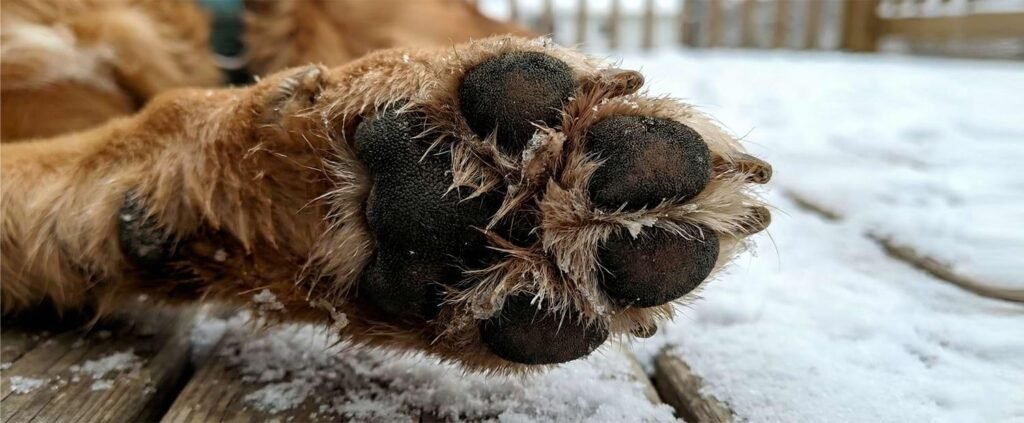
Winter Paw Care for Canadian Dogs: Protect Their Paws From Snow, Salt, and Ice
Canadian winters are beautiful — but they’re brutal on your dog’s paws. From the prairie freezes of Alberta to the wet, salty streets of southern Ontario, winter throws a gauntlet of hazards at your dog’s feet every single day.
Road salt. Freezing pavement. Crusted ice balls between toes. Cracked, bleeding pads.
If you’ve ever watched your dog limp after a walk or frantically lick their paws the moment you get inside, you’ve seen winter paw damage firsthand. The good news? Most of it is completely preventable with the right routine and the right paw protection.
This guide covers everything Canadian dog owners need to know about winter paw care — why winter is so hard on paws, how to protect them, what to do if damage has already happened, and city-specific advice for Calgary, Edmonton, Lethbridge, and Red Deer.
Why Winter Is Hard on Dog Paws in Canada
Canadian dogs face a unique combination of winter threats that most other countries simply don’t deal with at the same intensity. It’s not just the cold — it’s the chemicals, the ice, and the duration. Canadian winters can last five to six months, meaning your dog’s paws are under sustained assault for half the year.
How Road Salt Damages Paw Pads
Road salt — specifically the de-icing mixtures used on Canadian streets and sidewalks — is public enemy number one for dog paws. Most municipal de-icers contain a blend of sodium chloride, calcium chloride, and magnesium chloride. These chemicals are highly corrosive and hygroscopic, meaning they actively draw moisture out of whatever they touch.
When your dog walks on a salted sidewalk, those chemicals begin:
- Drying out the paw pads within minutes, stripping the natural oils that keep the skin elastic and resilient
- Causing chemical irritation on sensitive paw tissue, especially if the salt lodges in the crevices between pads
- Creating micro-abrasions that make the pads more vulnerable to infection with every subsequent walk
- Being ingested when your dog licks their paws after a walk — which can cause gastrointestinal upset, excessive thirst, and in severe cases, sodium toxicity risk
Calcium chloride, commonly used in colder regions like Alberta because it works at lower temperatures, is particularly aggressive. It generates heat as it dissolves, which can cause direct thermal burns on contact with moist paw pads.
Did you know? A single walk through a heavily salted parking lot can significantly reduce the moisture content of your dog’s paw pads. Over a full winter, this cumulative drying leads to cracking, bleeding, and chronic pain.
Ice and Cold: Physical Damage to Paw Tissue
Beyond chemical exposure, the physical environment of a Canadian winter takes its own toll:
- Freezing temperatures cause blood vessels in the paw pads to constrict, reducing circulation and leaving the tissue more susceptible to damage
- Ice crystals can form in the tiny cracks of already-dry pads, expanding and worsening the fissures
- Snow balls clump between the toes and in the long hair around the paws, creating painful, ice-hard masses that pinch the skin with every step
- Sharp ice edges on packed snow and icy sidewalks act like tiny knives, slicing at pad surfaces
- Frostnip and frostbite are real risks during extended outdoor time, particularly for dogs with thin coats or small paws
Dogs don’t register cold the same way humans do — their excitement about being outside often masks discomfort until real damage has been done.
Signs Your Dog Has Paw Damage from Winter Conditions
Most dogs are stoic about paw pain, so you need to know what to look for. Check your dog’s paws after every winter walk and watch for these warning signs:
- Limping or favoring one or more paws — the most obvious sign, but often a late one
- Excessive licking or chewing at paws, especially immediately after coming inside
- Visible cracking or splitting on the surface of the paw pads
- Redness or inflammation between the toes or around the pad edges
- Bleeding, even small amounts, from pad surfaces or between toes
- Whimpering or pulling back when you touch their paws
- Snow balling — large clumps of ice stuck between toes that the dog can’t shake loose
- Changes in gait — walking gingerly, “tiptoeing,” or reluctance to put weight on front paws
If you notice any of these signs, it’s time to adjust your winter paw care routine immediately. And if you see bleeding or deep cracks, consult your veterinarian before attempting home treatment — infected paw wounds can escalate quickly.
How to Protect Your Dog’s Paws in Winter
Prevention is infinitely easier than treatment. A solid winter paw care routine takes about two minutes per walk and can save your dog weeks of discomfort. Here are the four pillars of winter paw protection.
Use a Natural Paw Balm Before and After Walks
This is the single most impactful thing you can do. A high-quality, natural dog paw balm Canada acts as a protective barrier between your dog’s pads and the harsh winter environment.
Before walks: Apply a thin layer of balm to all four paws, making sure to cover the pads, the spaces between toes, and the edges where pads meet the fur. This creates a barrier that repels salt, water, and ice while locking in natural moisture.
After walks: Wipe paws clean (more on this below), then reapply the balm. This post-walk application is actually the more important one — it replenishes moisture that was lost during the walk and gives the pads time to absorb the conditioning ingredients while your dog is resting.
What makes a good winter paw balm?
- Natural, food-grade ingredients — since your dog will inevitably lick it off
- Beeswax or plant wax base — creates the water-repellent barrier
- Oil blends — for deep moisturizing
- NO artificial fragrances, petroleum products, or chemical preservatives — these can worsen irritation and are harmful if ingested
Dog Boots: Do They Actually Work?
Yes — but only if your dog will actually wear them, and only if you get the right kind.
The pros:
- Provide a complete physical barrier against salt, ice, and cold
- Eliminate the need for post-walk paw cleaning
- Offer traction on icy surfaces
- Essential for dogs with pre-existing paw conditions or extremely sensitive feet
The cons:
- Many dogs absolutely hate them initially and will refuse to walk
- Poorly fitted boots fall off, twist, or cause rubbing injuries
- They can be expensive for a quality set
- They don’t eliminate the need for paw conditioning — the pads still get dry from cold exposure
If you go the boot route, look for flexible, non-slip soles with good grip, secure velcro closures, and proper sizing based on the manufacturer’s measuring guide.
Pro tip: Introduce boots gradually indoors. Put them on for two minutes, give treats, take them off. Repeat for longer periods over a week. Most dogs will adapt if you make it positive. But if your dog genuinely finds boots distressing, don’t force it — a good paw balm routine is a perfectly effective alternative.
Washing Paws After Every Walk
This is non-negotiable during a Canadian winter. Every single time your dog comes inside from a walk, their paws need to be cleaned. Here’s the proper method:
- Use lukewarm water — not hot, which can irritate already-stressed skin, and not cold, which defeats the purpose
- Rinse all four paws thoroughly, paying attention to between the toes and under the paw fur
- Gently pat dry with a clean towel — don’t rub, which can irritate micro-abrasions
- Inspect for salt crystals, ice balls, cuts, or cracks while drying
- Apply paw balm immediately after drying
What you should NOT do:
- Don’t use commercial paw wipes that contain alcohol, fragrances, or harsh cleansers — these strip natural oils
- Don’t let your dog lick their paws before you’ve cleaned them — they’re ingesting road salt
- Don’t skip this step “just this once” — it only takes one salt-heavy walk to cause significant damage
Trimming Paw Hair in Winter
The long hair that grows between your dog’s toes and around the edges of their paws serves a purpose in summer — but in winter, it becomes a liability. This hair traps snow, which compacts into hard ice balls, and it wicks salt-laden slush directly against the skin where it sits and causes chemical irritation.
Trim the hair:
- Between the toes, flush with the pad surface
- Around the edges of the main pad
- Under the paw, between the large central pad and the smaller toe pads
Use clippers, not scissors — it’s too easy to nick the skin with scissors in this sensitive area. If you’re not comfortable doing this yourself, most groomers offer a quick “paw trim” service that takes five minutes.
Don’t shave the paws completely bare — that top coat of short hair does provide some insulation. You just want to eliminate the hair that can trap snow and hold salt against the skin.
What to Do If Your Dog’s Paws Are Already Damaged
If you’re reading this and your dog already has cracked, bleeding, or raw paw pads, don’t panic — but do act promptly. Minor damage can be managed at home, but moderate to severe cases need veterinary attention.
For minor cracks and dryness:
- Clean the paws thoroughly with lukewarm water
- Apply a generous layer of paw balm and massage it in
- Prevent licking with a cone, socks, or distraction — licking prevents healing and introduces bacteria
- Apply balm 2-3 times daily until healed
- Reduce walk lengths and stick to cleared, unsalted paths while healing
For bleeding or deep cracks:
- Clean gently with a pet-safe antiseptic
- Apply a thin layer of balm and cover with a light, breathable non-stick bandage
- See your veterinarian — deep pad lacerations often require professional cleaning, possible stitching, and antibiotics to prevent infection
For suspected chemical irritation from road salt:
- Flush the paws with copious lukewarm water for several minutes
- Do not apply any home remedies — these can worsen the situation
- Contact your veterinarian immediately — chemical irritation can cause tissue damage that isn’t fully visible on the surface
When in doubt, call your vet. Paw pad injuries are notoriously slow to heal because the pads bear weight and are constantly exposed to bacteria. What looks like a small crack can become a chronic, infected wound if not treated properly.
City-Specific Risks: Calgary, Edmonton, Lethbridge, Red Deer
Alberta’s cities present some of the most challenging winter paw conditions in Canada. Here’s what to watch for in each:
Calgary
Calgary’s winter is defined by extreme temperature swings and the Chinook. A Tuesday might be -30°C with bone-dry snow, and by Thursday it’s +5°C with slush everywhere. These rapid thaws create a unique hazard — the melting snow dissolves accumulated road salt into highly concentrated brine pools on sidewalks. Your dog is walking through liquid salt solution that clings to the paws and is nearly impossible to shake off.
Calgary tip: Be especially vigilant about paw cleaning during Chinook thaws. The brine is worse than dry salt because it coats every surface of the paw, including between the toes, and it doesn’t just brush off.
Edmonton
Edmonton holds the title for consistent cold. While Calgary gets Chinook breaks, Edmonton often stays below -20°C for weeks at a stretch. The city uses a sand-salt mixture on most residential streets and pure salt on major arteries. The extreme, sustained cold means paw pads dry out faster, and any existing cracks worsen quickly because the skin loses elasticity in deep cold.
Edmonton tip: Double up on your balm routine during deep freezes. Apply before the walk, and reapply immediately after. Consider shorter, more frequent walks rather than one long exposure.
Lethbridge
Lethbridge is famous for its wind — some of the strongest, most sustained winter winds in Canada. Wind chill regularly pushes perceived temperatures 10-15 degrees below the actual reading. This wind-driven cold strips moisture from paw pads even faster than still-air cold, and blowing snow creates a sandblasting effect on exposed pad surfaces.
Lethbridge tip: Wind protection matters for paws too. Stick to sheltered walking routes when possible, and pay extra attention to the tops of the paws and the fur around them — wind-driven ice particles cause abrasion on areas you might not normally check.
Red Deer
Red Deer sits in a transition zone where it gets heavy snowfall, periodic thaws, and consistent use of de-icing chemicals on major thoroughfares and highway on-ramps. This creates a messy, slushy, salt-heavy environment for most of the winter.
Red Deer tip: The slush factor is your biggest enemy here. Slush splashes salt-laden water up above the paw pads and onto the lower legs. Clean and condition not just the pads but the lower leg fur as well.
Frequently Asked Questions About Winter Paw Care
Q: Can I use Vaseline on my dog’s paws? A: Technically yes — petroleum jelly is non-toxic and will create a barrier. However, it’s a poor choice compared to a proper paw balm. Petroleum jelly doesn’t condition or repair the skin — it just sits on top. It also softens the pads too much with repeated use, making them more prone to injury. A natural wax-based balm provides barrier protection and active conditioning.
Q: How often should I apply paw balm in winter? A: At minimum, once daily after your last walk. Ideally, before and after every walk during the harshest part of winter (December through February in most of Canada). For dogs with pre-existing dryness or crack-prone pads, three times daily is appropriate.
Q: My dog won’t let me near their paws. What do I do? A: Paw handling resistance is common and usually stems from a negative association. Desensitization takes patience: touch the paw for one second, treat. Hold the paw for two seconds, treat. Gradually build up. Don’t force it — if your dog is pulling away, you’ve gone too far too fast.
Q: Is road salt toxic if my dog licks it off their paws? A: Yes, it can be. Small amounts cause gastrointestinal upset — vomiting, diarrhea, excessive thirst. Large amounts can cause sodium toxicity, which is a medical emergency. This is exactly why cleaning paws before your dog can lick them is so critical.
Q: Do some dog breeds need more paw protection than others? A: Yes. Breeds with thin, single-coat feet, small dogs with less paw surface area, and dogs with pre-existing skin conditions all need extra vigilance. Conversely, breeds bred for cold weather have tougher, more cold-resistant pads — but they still need protection from chemical de-icers, which no paw is immune to.
Q: Should I avoid walking on salted sidewalks entirely? A: That’s ideal but unrealistic for most Canadian dog owners. A better approach is to minimize exposure where you can — walk on snow-covered surfaces alongside the sidewalk rather than on the cleared, salted pavement itself — and use proper protection for the portions where salt contact is unavoidable.
Q: Can puppy paws handle winter differently than adult dog paws? A: Puppy paw pads are softer and thinner than adult pads, making them more vulnerable to both chemical and physical damage. Puppies also have less learned caution about walking on painful surfaces. If you’re raising a puppy through a Canadian winter, be extra conservative — shorter walks, vigilant cleaning, consistent balm application, and consider boots for puppies under one year.
Canadian winters don’t show any signs of getting milder, and your dog’s paws don’t toughen up to road salt — they just keep taking damage. The difference between a dog that suffers through winter and a dog that thrives through it comes down to a simple, consistent routine: trim the hair, apply a natural paw balm before and after walks, wash the paws clean every time, and inspect for damage regularly.
Two minutes of prevention per walk. That’s all it takes.