
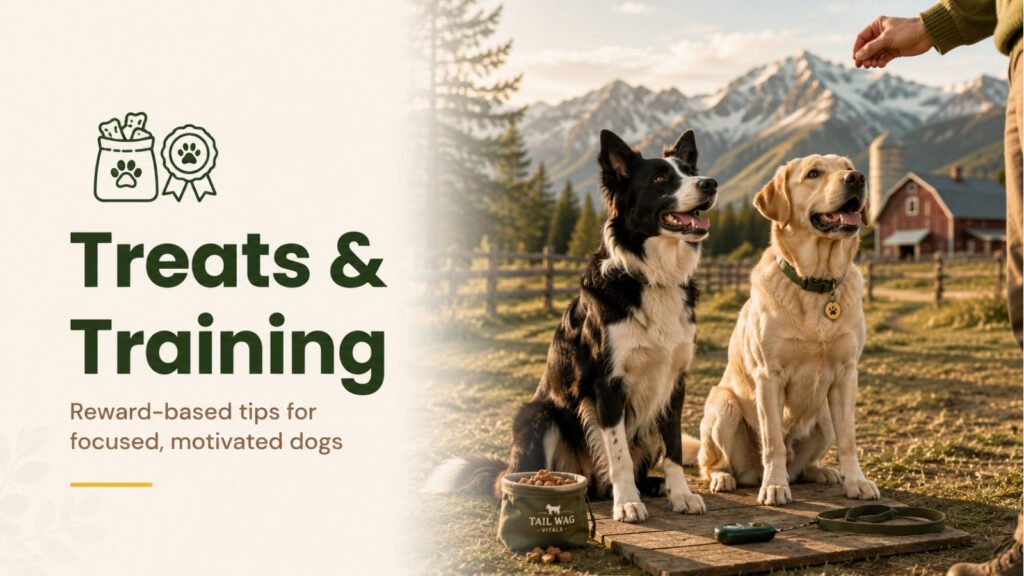
Pre-Walk, Post-Walk: How Timing Your Dog’s Treats Matters
When to give dog treats depends on what you want the treat to accomplish. A treat before a walk can serve a different purpose from the same treat given mid-walk as a training reward, and both differ from a treat you give once your dog gets home and settles down. Timing doesn’t change what a treat is, but it can change what it does.
Why Timing Your Dog’s Treats Changes Their Impact
Before activity, a treat can provide quick, easy energy without sitting heavily in the stomach. During activity, its main job is behavioural rather than nutritional because it marks and rewards something your dog just did. After exercise, the same treat reaches a body that’s cooling down and, depending on how hard your dog worked, may help replenish what exercise used. The same treat can therefore serve three different roles depending on when you give it.
The Shift from Random Rewarding to Strategic Feeding
Most dogs get treats on a fairly random schedule: whenever the leash comes out, whenever they’re underfoot in the kitchen, or whenever they’ve been good and someone remembers. Occasion-based feeding simply means matching a treat’s timing and type to what’s actually happening around it: energy before movement, quick rewards during movement, and a calmer wind-down piece after movement. It doesn’t require feeding more treats overall. It just gives the treats you’re already giving a clearer purpose.
Pre-Walk and Pre-Activity Treats
For a typical daily walk, a small treat beforehand isn’t something most dogs need to worry about digestively. The caution that matters involves volume and intensity, not the general idea of a pre-walk treat. Feeding a large meal and then heading straight into strenuous or prolonged exercise creates the bigger concern, particularly in large, deep-chested breeds. Risk factors for gastric dilatation-volvulus (bloat) include large meals and strenuous exercise soon after eating. A small handful of a light treat before an ordinary walk creates a very different situation from a full meal before a run or an intense play session.
Energy Priming Without Digestive Burden
If you want a treat that sits light before activity, choose a low-fat, easily digestible option rather than a rich, dense one. Our Prairie Air Beef Lung is a good example of this category. Tail Wag Vitals describes it as light and easy to digest compared with denser organ treats such as liver, making it a reasonable option shortly before a walk without adding the same heaviness as a richer treat. For anything more strenuous than a walk, leave a longer gap between a full meal and exercise. If your dog is a large or deep-chested breed prone to bloat, that precaution matters even more.
During-Activity Rewards
Treats given mid-walk usually do training work: reinforcing a recall, loose leash walking, a check-in, or calm behaviour around a distraction. That means the timing requirement has more to do with reinforcement than digestion.
Quick Energy and Positive Reinforcement on the Move
Give the reward immediately after the behaviour you want to reinforce. Any delay risks reinforcing whatever your dog happens to do by the time the treat arrives rather than the behaviour you actually wanted. That makes a mid-walk reward a logistics problem as much as a nutrition one: you need something you can get out of a pocket and into your dog’s mouth in a second or two, in a small enough piece that it doesn’t interrupt the walk. Light, low-fat treats that break easily into small pieces work well here because they let you reward frequently during a training-focused walk without adding much bulk. A small treat’s speed and convenience make it useful mid-activity, not a specific nutritional property, so this is more about picking something practical to carry than about timing a metabolic window.
Post-Walk and Post-Activity Treats
Once the activity ends, a treat can do two things: help reinforce calm settling at the end of a walk and, for dogs that have actually worked hard, support recovery.
Recovery Nutrition in the 30-Minute Window
The idea of a post-exercise feeding window comes mainly from canine sports and working-dog research rather than studies of everyday leisure walks. Research in these dogs suggests that muscle proteins broken down during exercise can recover more completely and rapidly when the dog receives food within about two hours of exercising, with earlier feeding often preferred. For dogs doing repeated or multi-day bouts of intense work, researchers have also studied carbohydrate intake within roughly 30 minutes of exercise to help replenish muscle glycogen and reduce muscle breakdown.
That guidance matters for working dogs, sled dogs, and dogs performing genuinely strenuous, prolonged exercise. For the average dog after an average walk, the body does not deplete glycogen or break down muscle to an extent that requires precise post-exercise timing. There is no evidence that a companion dog needs a treat within a strict 30-minute window after a normal walk. A treat once your dog gets home and settles is perfectly reasonable, and it can double as reinforcement for calm behaviour without turning the end of a walk into a closing window you have to hit.
How Occasion-Based Feeding Increases Daily Treat Value
None of this requires feeding more treats. It simply means the treats already in your dog’s day can serve a clearer purpose: something light before you head out, something small and fast during training moments, and something calming once you’re both back home. Keeping the total within a sensible daily calorie allowance still matters more than any single moment of timing. If you want help matching specific treats to specific parts of your dog’s routine, take a look at our full range on Tail Wag Vitals, or reach out through our contact page if you’d like help thinking it through for your dog specifically.
Frequently Asked Questions
When is the best time to give my dog a treat?
It depends on the purpose. A light, low-fat treat works well shortly before activity, quick and easily broken pieces work best during activity for training rewards, and a treat after activity can reinforce calm behaviour once your dog has settled.
Should I give treats before or after walks?
Both are fine for a typical walk. Before the walk, keep the treat small and low-fat so it doesn’t sit heavily. After the walk, a treat can reward a calm end to the outing. The main thing to avoid is a large meal followed immediately by strenuous exercise, which can increase bloat risk in large, deep-chested breeds.
Does treat timing affect digestion?
For routine walks, a small treat beforehand generally isn’t a digestive concern. The bigger caution involves feeding a large meal right before vigorous or prolonged exercise, which can contribute to gastrointestinal upset and increase bloat risk in predisposed large breeds.
How many treats should a dog get per walk?
There’s no fixed number. What matters more is keeping total treat calories across the whole day to roughly 10% of your dog’s daily calorie needs. A walk with frequent training rewards should use smaller, lower-calorie pieces so the total stays reasonable.
Can timing treats improve training results?
Yes, specifically because reinforcement works best when it immediately follows the behaviour you’re rewarding. A treat delivered within a second or two of the desired behaviour creates a clearer connection than the same treat delivered several seconds later, when your dog may already have moved on to something else.