
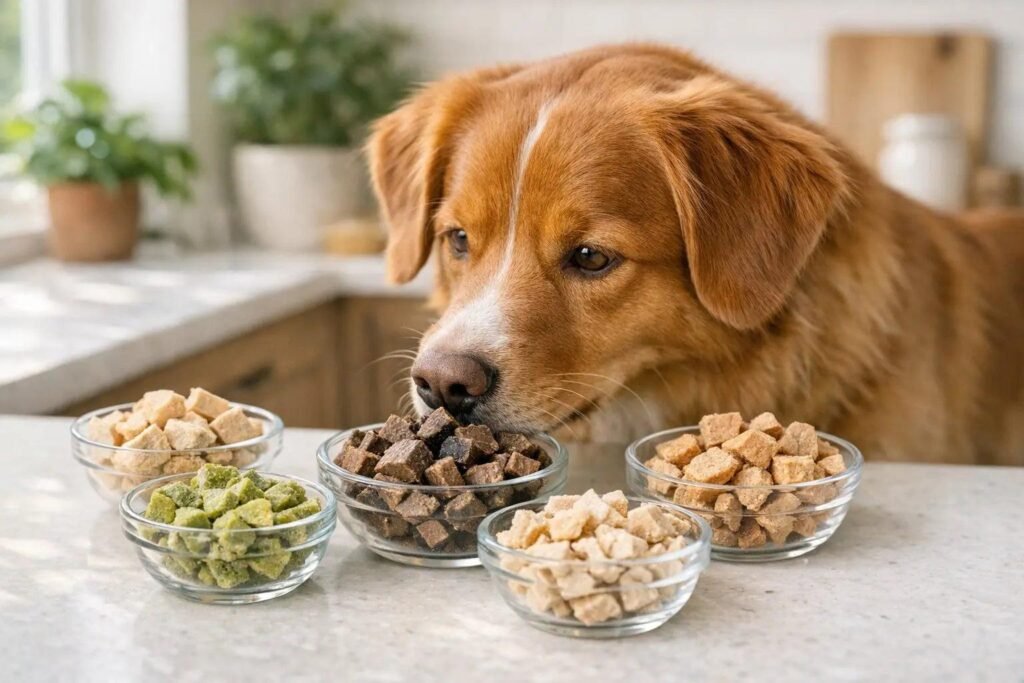
Freeze-Dried vs. Dehydrated Dog Treats: Which Is Better for Your Dog?
Freeze-dried vs dehydrated: not all ‘natural’ dog treats are equal. A clear breakdown of what each method does to nutrients, flavour, and safety.
What Is Freeze-Drying? How It Works
When you pick up a lightweight, crumbly piece of freeze-dried meat, you are holding food that has been preserved without ever being exposed to heat. It is the closest you can get to raw meat in a dry, shelf-stable form.
The Science Behind Lyophilisation
The scientific term for freeze-drying is lyophilisation. While the word sounds complicated, the process is straightforward. It relies on cold and pressure rather than heat.
Here is how it works in three simple steps:
- Flash-Freezing: Fresh raw meat is frozen solid at extremely low temperatures.
- Vacuum Chamber: The frozen meat is placed into a vacuum chamber.
- Vapor Extraction: In this vacuum, the frozen water in the meat turns directly into vapor. It skips the liquid phase entirely.
Because the water is removed as vapor without ever warming the meat up, the physical structure of the food is never cooked or compromised.
What Nutrients Freeze-Drying Preserves
Because heat destroys nutrients, avoiding it entirely pays off. Freeze-drying protects the raw integrity of the meat.
This method preserves:
- Delicate vitamins that would normally break down under heat.
- Natural enzymes that aid in healthy digestion.
- Amino acids essential for muscle maintenance.
- Original aroma and color that dogs naturally crave.
To see how we apply this method to our products, check out our breakdown of freeze-dried dog treats in Canada.
What Is Dehydration? How It Works
Dehydration is one of the oldest food preservation methods in history. It is widely used in the pet treat industry, but it comes with nutritional limitations.
Temperature and Its Effect on Nutrition
Standard dehydration removes moisture from meat by applying continuous, low-level heat over a long period. Think of a traditional food dehydrator or a low-heat oven.
Even though the temperatures are much lower than standard baking or kibble extrusion, that continuous heat is still present throughout the entire process.
What Is and Isn’t Preserved Through Dehydration
Because of this prolonged heat exposure, dehydration inevitably degrades parts of the raw meat.
Here is the reality of dehydrated treats:
- What it keeps: Basic macronutrients like protein and fat remain intact.
- What it loses: A measurable amount of fragile vitamins and natural enzymes are destroyed.
- What it changes: The protein structures are altered, and the meat takes on a tough, leathery texture that requires heavy chewing.
Freeze-Dried vs Dehydrated: A Direct Comparison
To make the best choice for your dog, it helps to look at these two methods side-by-side.
Nutritional Retention
- Freeze-Dried: Preserves the vast majority of raw nutrients. It is as close to a raw diet as you can get in a dry treat.
- Dehydrated: Retains basic proteins and fats, but loses fragile vitamins due to low, continuous heat.
Texture and Palatability
- Freeze-Dried: Lightweight, airy, and easy to snap into tiny pieces. It dissolves quickly in the mouth, making it perfect for rapid-fire training rewards or senior dogs with sensitive teeth.
- Dehydrated: Dense, tough, and chewy. While some dogs enjoy the chew factor, it is much harder to break apart for training and can be tough on small jaws.
Shelf Life and Storage
- Freeze-Dried: Because the vacuum process removes nearly all moisture, bacteria cannot grow. It is completely shelf-stable for years without refrigeration or chemical preservatives.
- Dehydrated: Generally shelf-stable, but because it retains slightly more moisture, it has a shorter shelf life and can go stale or rancid faster if not stored perfectly.
Price and Value
- Freeze-Dried: Carries a higher upfront price tag due to the specialized vacuum equipment. You are paying for premium, raw-equivalent nutrition.
- Dehydrated: Typically cheaper to produce and buy, but you are getting a lower tier of nutritional value for that lower price.
If you want to understand the difference between real meat nutrition and marketing fluff, read our guide on natural dog treats in Canada.
Which Is Better for Your Dog?
If your goal is to feed your dog a treat that mirrors the biological nutrition of a raw diet—without the mess of handling raw meat—freeze-drying is the clear winner.
Here is why freeze-dried is the superior choice:
- Maximum Nutrition: It offers superior nutrient retention compared to any heat-based method.
- Better Digestion: The light, crumbly texture is easily broken down by your dog’s digestive tract.
- Training Perfection: It snaps cleanly into tiny rewards without crumbling into useless dust or leaving greasy residue in your pockets.
Dehydrated treats are not “bad,” but they are a step down from freeze-dried when it comes to optimizing your dog’s health.
How Tail Wag Vitals Uses Freeze-Drying
At Tail Wag Vitals, we don’t use heat to make our treats. We rely entirely on our sub-zero vacuum process.
- Single-Ingredient Meats: We source pure beef liver and lung directly from Hutterite farms in Alberta.
- No Heat, No Shortcuts: We flash-freeze and extract the moisture as vapor to lock in raw nutrients.
- No Fillers: We never add grains, starches, or chemical preservatives to make our bags weigh more.
We do this because we believe dogs don’t need heat-processed mysteries. They need clean, honest, high-value rewards that support their biological needs.
Frequently Asked Questions
Q: Is freeze-dried better than dehydrated for dogs?
A: Yes. Because freeze-drying bypasses heat entirely, it preserves significantly more raw nutrients, enzymes, and natural flavors. It also creates a lighter, crispier texture that is much easier for dogs to digest and for owners to use as training treats.
Q: Can dehydrated treats make my dog sick?
A: High-quality dehydrated treats are generally safe. However, their tough, leathery texture can be difficult for some dogs to chew and digest. If your dog has a sensitive stomach, the harder-to-break-down proteins in dehydrated meat may cause upset compared to easily dissolved freeze-dried meat.
Q: Why is freeze-dried dog food more expensive?
A: Freeze-drying requires specialized commercial vacuum chambers and a longer processing time than simply baking moisture out of meat. You are paying for a premium, carefully handled product that retains its raw nutritional value without needing artificial chemical preservatives.
Q: Do I need to add water to freeze-dried treats?
A: No. Our freeze-dried treats are designed to be fed dry as a training reward or everyday snack. However, if you have a senior dog or a dog with dental issues, you can crumble them and add warm water or bone broth to soften them back up into a raw, meaty texture.
Ready to give your dog the superior nutrition of sub-zero processed, raw meat?